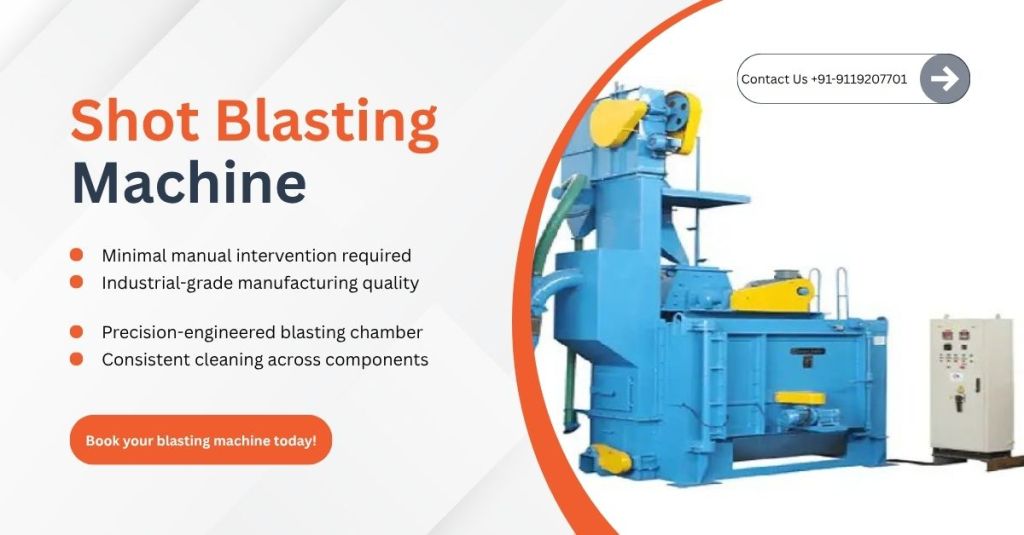
Learn how Indian buyers compare shot blasting machine prices based on blast wheel configurations. Discover key factors that affect cost, efficiency, and ROI.
Why One Blast Wheel Can Change the Entire Buying Decision
A shot blasting machine may look similar from the outside, but one key component can significantly impact its price, performance, and productivity—the blast wheel.
Many Indian manufacturers focus only on the total machine price when comparing options. However, experienced buyers know that evaluating the price per blast wheel provides a clearer picture of long-term value. Whether you operate a foundry, fabrication unit, steel plant, or automotive manufacturing facility, understanding blast wheel configurations can help you make a smarter investment.
As production demands increase across India, businesses are paying closer attention to machine efficiency, operating costs, and return on investment before finalizing a purchase.
What Is a Blast Wheel and Why Does It Matter?
A blast wheel is the heart of a shot blasting machine. It accelerates abrasive media at high speed to clean, strengthen, or prepare metal surfaces.
The number of blast wheels installed directly affects:
- Cleaning speed
- Surface coverage
- Production capacity
- Energy consumption
- Machine price
- Maintenance requirements
Machines may be equipped with one, two, four, six, or even eight blast wheels depending on the application.
According to surface preparation specialists, “The right blast wheel configuration is not about having more wheels; it’s about matching blasting power with production requirements.”
Why Indian Buyers Compare Price Per Blast Wheel
Instead of looking only at the machine’s overall cost, buyers increasingly compare the value delivered by each blast wheel.
This comparison helps answer important questions:
- How much blasting power am I getting?
- Will the machine support future production growth?
- Is the investment justified by productivity gains?
- What will maintenance costs look like over time?
For example, a machine with four high-efficiency blast wheels may provide better output than a lower-cost machine using older wheel technology.
As a result, many procurement teams now evaluate performance metrics alongside pricing.
Factors That Influence Blast Wheel Pricing
1. Blast Wheel Size and Capacity
Larger blast wheels can throw more abrasive media per minute, increasing cleaning efficiency.
Machines equipped with high-capacity wheels generally command higher prices because they reduce processing time and improve throughput.
2. Wheel Material Quality
Premium wear-resistant components last longer under abrasive conditions.
Indian buyers often compare:
- Manganese steel components
- High-chrome wear parts
- Alloy steel impellers
- Heavy-duty control cages
Better materials usually mean lower replacement costs over the machine’s lifespan.
3. Motor Power
Blast wheel motors are available in different power ratings.
Higher-powered motors generate greater blasting force and support larger production volumes. However, they also contribute to higher machine costs.
4. Automation Features
Modern shot blasting machines often include:
- PLC controls
- Variable frequency drives (VFDs)
- Automatic abrasive recovery systems
- Digital monitoring panels
These features increase efficiency and reduce operator intervention, making them attractive despite higher initial costs.
What Smart Buyers Compare Beyond Price
Production Output
A lower-priced machine may appear attractive initially, but if it processes fewer components per hour, overall operating costs can increase.
Abrasive Consumption
Efficient blast wheel designs minimize abrasive waste and improve media utilization.
Energy Efficiency
Electricity costs continue to rise in India. Buyers increasingly compare energy consumption before purchasing equipment.
Maintenance Requirements
Machines designed for quick maintenance reduce downtime and improve productivity.
Industry consultant Ambica Singh notes:
“The cheapest machine is rarely the most economical. Buyers should evaluate maintenance, spare parts, energy use, and productivity together.”
Common Blast Wheel Configurations in India
Different industries require different setups.
Single Blast Wheel Machines
Best suited for:
- Small workshops
- Low-volume production
- Budget-conscious buyers
Dual Blast Wheel Machines
Suitable for:
- Medium-scale fabrication units
- Engineering workshops
- Structural steel cleaning
Four or More Blast Wheels
Ideal for:
- Foundries
- Automotive manufacturing
- Heavy engineering plants
- High-volume production lines
Although these machines cost more initially, they often deliver faster ROI through increased productivity.
How to Calculate Value Instead of Just Cost
Before purchasing, ask suppliers:
- What is the blasting rate per wheel?
- What is the expected wheel lifespan?
- How much abrasive is consumed per hour?
- What are annual maintenance costs?
- Is after-sales support available locally?
These factors provide a more accurate assessment of value than price alone.
The Future of Blast Wheel Technology in India
Indian manufacturers are increasingly adopting advanced blast wheel designs that improve efficiency while reducing operating costs.
Innovations include:
- Energy-efficient motors
- Wear-resistant components
- Smart monitoring systems
- Automated abrasive management
As competition grows, buyers are focusing less on upfront cost and more on long-term operational performance.
Know More – https://medium.com/@amarkhand33/industrial-shot-blasting-machine-with-quick-delivery-in-india-06f2f9543fde
Conclusion
When evaluating a shot blasting machine, the price per blast wheel offers valuable insight into the machine’s real performance potential. Smart buyers compare productivity, efficiency, maintenance, and durability—not just the purchase price.
A machine with the right blast wheel configuration can increase throughput, reduce operating costs, and deliver stronger returns over its lifetime. By looking beyond the initial quotation, Indian manufacturers can make more informed and profitable equipment investments.
Looking for a shot blasting machine that delivers maximum value per blast wheel? Consult experienced manufacturers and compare performance specifications, maintenance costs, and production capabilities before making your final decision. The right machine today can improve productivity and profitability for years to come.
Frequently Asked Questions (FAQs)
1. What is the most important factor affecting shot blasting machine price?
The number of blast wheels, wheel capacity, motor power, automation features, and machine size are among the biggest factors affecting price.
2. Is a machine with more blast wheels always better?
Not necessarily. The ideal number depends on production volume, component size, and cleaning requirements.
3. How does blast wheel efficiency impact operating costs?
Efficient blast wheels reduce abrasive consumption, energy usage, and processing time, leading to lower operating costs.
4. Which industries typically use multi-wheel shot blasting machines?
Foundries, automotive manufacturers, steel fabrication units, railways, and heavy engineering industries commonly use machines with multiple blast wheels.
5. How can buyers compare two machines fairly?
Compare blasting capacity, wheel design, energy consumption, maintenance requirements, spare part availability, and expected productivity rather than focusing only on purchase price.


Leave a Reply