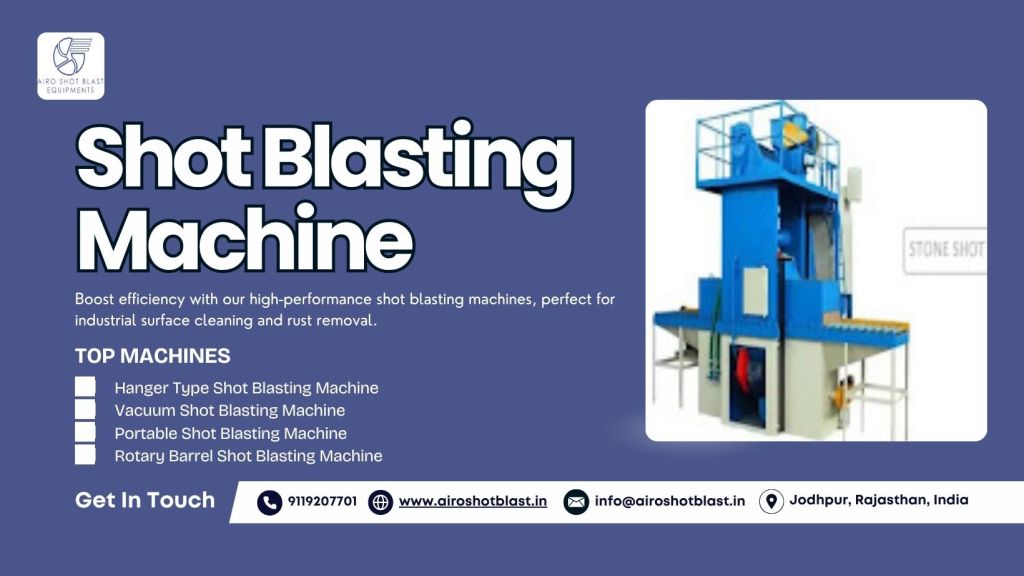
Surface preparation is a critical step in manufacturing that directly affects product quality, durability, and performance. Without proper cleaning and finishing, coatings fail, corrosion develops faster, and components lose their strength over time. Shot blasting machines have transformed this process by introducing speed, precision, and consistency into industrial surface preparation.
What is a Shot Blasting Machine?
A shot blasting machine is an advanced industrial system used to clean, strengthen, or polish metal surfaces by propelling abrasive materials at high velocity.
Working Principle of Shot Blasting
Shot blasting operates using centrifugal force. Abrasive media such as steel shots or grit are accelerated through a rotating blast wheel and directed toward the surface.
Key Components of a Shot Blasting Machine
- Blast wheel for high-speed abrasive projection
- Blasting chamber for enclosed operation
- Abrasive media such as steel shots or grit
- Dust collector for maintaining a clean environment
Shot Blasting vs Sandblasting
Shot blasting uses a closed system and recyclable abrasives, making it more efficient and environmentally friendly compared to traditional sandblasting.
Why Surface Preparation is Critical in Manufacturing
Proper surface preparation ensures that materials perform as expected in demanding industrial conditions.
- Improves Coating Adhesion: A clean and roughened surface allows paints and coatings to bond effectively, reducing the chances of peeling or flaking.
- Enhances Product Durability: Removing rust, scale, and contaminants increases the lifespan of components and prevents premature failure.
- Prevents Corrosion: Surface impurities can lead to corrosion. Shot blasting removes these impurities, ensuring long-term protection.
How Shot Blasting Machines Work
Shot blasting machines follow a systematic and continuous process to deliver consistent results.
Step-by-Step Process
Loading the Component
Components are placed inside the blasting chamber or on a conveyor system.
Abrasive Acceleration
The blast wheel propels abrasive media at high speed toward the surface.
Surface Impact Cleaning
The abrasive particles strike the surface, removing rust, scale, and contaminants.
Abrasive Recycling
Used abrasives are collected, cleaned, and reused, making the process cost-effective.
Dust Collection
Dust and debris are extracted through filtration systems to maintain a safe working environment.
Types of Shot Blasting Machines Used in Manufacturing
Different types of shot blasting machines are designed for specific industrial applications.
Tumblast Shot Blasting Machines
Ideal for batch processing of small to medium-sized components. These machines ensure uniform cleaning of multiple parts simultaneously.
Hanger Type Shot Blasting Machines
Suitable for large and delicate components that require careful handling during the blasting process.
Table Type Shot Blasting Machines
Best for heavy or flat components that need precise and controlled surface treatment.
Portable Shot Blasting Machines
Designed for on-site operations such as construction or maintenance projects.
Automated Shot Blasting Systems
Used in high-volume manufacturing environments where speed and consistency are essential.
Key Benefits of Shot Blasting Machines
Shot blasting machines offer significant advantages over traditional surface preparation methods.
Increased Efficiency
The process completes surface cleaning in minutes, significantly reducing production time.
Reduced Labor Costs
Automation minimizes the need for manual labor, lowering operational expenses.
Consistent Surface Finish
Every component receives a uniform finish, ensuring consistent product quality.
Environmentally Friendly Operation
Recycling abrasives and using enclosed systems reduces waste and environmental impact.
Applications of Shot Blasting in Different Industries
Shot blasting machines are widely used across various industries for surface preparation and finishing.
- Automotive Industry: Used for cleaning engine parts, improving fatigue strength, and preparing surfaces for coating.
- Aerospace Industry: Ensures high precision and quality for critical aircraft components.
- Construction Industry: Removes rust and prepares steel structures for painting and coating.
- Foundry and Metal Fabrication: Cleans castings, removes sand residues, and improves surface finish.
Shot Blasting vs Traditional Surface Preparation Methods
Modern shot blasting technology offers clear advantages over older methods.
Manual Cleaning
Manual methods are slow, inconsistent, and labor-intensive compared to automated shot blasting.
Chemical Cleaning
Chemical processes can be hazardous and less environmentally friendly.
Shot Blasting Advantage
Shot blasting provides faster, safer, and more cost-effective surface preparation with superior results.
Related Post – https://697888fd76fae.site123.me/blog/affordable-industrial-shot-blasting-machine-for-bulk-buyers
Best Practices for Using Shot Blasting Machines
To achieve optimal performance and long-term efficiency, follow these best practices.
Selecting the Right Abrasive
Choose the correct size and hardness of abrasive media based on the material and required finish.
Regular Machine Maintenance
Inspect and maintain components such as blast wheels, filters, and chambers to avoid downtime.
Ensuring Operator Safety
Provide proper training and safety equipment to operators to prevent accidents.
Future Trends in Shot Blasting Technology
The shot blasting industry continues to evolve with technological advancements.
Automation and Robotics
Fully automated systems are reducing human intervention and increasing productivity.
Smart Monitoring Systems
Sensors and digital controls enable real-time monitoring and improved process control.
Energy-Efficient Machines
Modern machines are designed to reduce power consumption while maintaining high performance.
Conclusion
Shot blasting machines have revolutionized surface preparation in manufacturing by delivering speed, precision, and reliability. From improving coating adhesion to enhancing product durability, these machines play a vital role in modern industrial processes. By adopting the right machine and following best practices, manufacturers can achieve superior surface quality and long-term cost savings.


Leave a Reply