Walk into any fabrication shop and ask about surface preparation, and you’ll probably spark a debate that lasts through lunch break. Shot blasting versus sand blasting—it’s one of those discussions where everyone has an opinion, and those opinions are usually based on whatever equipment they happen to own.
Here’s the truth: neither technology “wins” universally. They’re fundamentally different approaches to surface preparation, and the right choice depends entirely on what you’re trying to accomplish. Let me break down the real differences so you can make an informed decision instead of just picking whatever your buddy down the street uses.
Understanding the Basic Difference
Before we get into the weeds, let’s establish what we’re actually comparing.
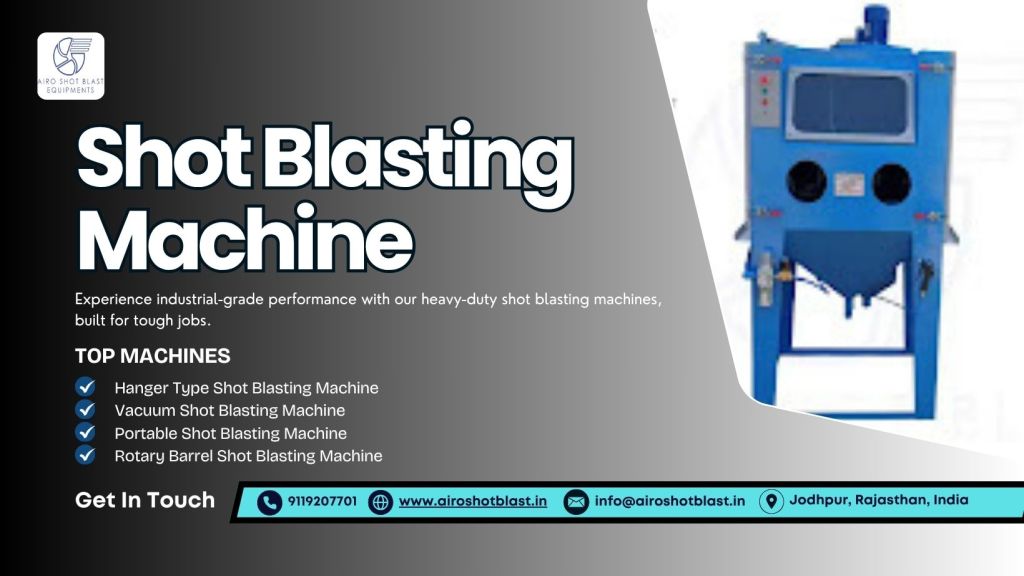
Shot blasting uses centrifugal force. Steel shot or grit is thrown at high velocity using a rotating blast wheel. Think of it like a super-powered ceiling fan that hurls metal media at your parts. It’s a mechanical process that typically happens in an enclosed chamber.
Sand blasting (or abrasive blasting, to be technically correct) uses compressed air to propel abrasive media through a nozzle. You’re essentially creating a high-pressure stream of abrasive particles. This can be done in a blast cabinet, a blast room, or even in the field with portable equipment.
That fundamental difference—mechanical versus pneumatic—creates a cascade of practical implications that affect everything from operating costs to the type of work you can do.
Speed and Efficiency: Where Shot Blasting Shines
If you’re processing volume, shot blasting is typically the speed demon. A properly sized shot blast machine can process parts continuously, cycling them through the blast chamber on conveyors or roller systems. I’ve seen operations running thousands of parts per shift through automated shot blast systems.
The blast wheels on these machines can throw media at velocities up to 250+ feet per second. That kind of impact energy makes quick work of mill scale, rust, and old coatings. For cleaning structural steel, deburring castings, or prepping large batches of similar parts, shot blasting is hard to beat on pure throughput.
Sand blasting, by comparison, is generally slower. You’re limited by nozzle size, air compressor capacity, and—most critically—operator fatigue. Even with an efficient setup, hand-held nozzle work is physically demanding. Your operator can only maintain that intensity for so long before they need a break.
That said, sand blasting has its own efficiency advantages in specific situations. For one-off parts, complex geometries, or field work, the setup time for sand blasting is minimal. Wheel up a compressor, connect your pot, and you’re blasting. No need to load parts into a chamber, program cycles, or wait for conveyors.
Precision and Control: The Sand Blasting Advantage
Here’s where sand blasting really shows its strength: precision work.
With a blast nozzle in hand, an experienced operator has incredible control. They can feather the blast intensity, target specific areas, work around delicate features, and adjust their approach on the fly. This makes sand blasting ideal for:
- Restoration work where you need to preserve certain features
- Complex castings with intricate details
- Selective coating removal
- Parts with varying material thicknesses
- Artistic or decorative applications
Shot blasting, being mechanized, is more of an all-or-nothing proposition. Parts get blasted uniformly, which is great for consistency but terrible when you need selective treatment. You can’t really tell a blast wheel, “Hey, be gentle on this section but aggressive over here.”
I once worked with a shop doing architectural metalwork. They tried shot blasting some ornamental castings and ended up rounding off all the fine details. Switched to sand blasting with glass bead media, and the results were night and day. Sometimes you need that human touch.
Media Options: Flexibility vs. Simplicity
Sand blasting wins hands-down on media variety. You can run:
- Steel grit or shot
- Aluminum oxide
- Glass bead
- Crushed glass
- Garnet
- Walnut shells
- Corn cob
- Sodium bicarbonate (baking soda)
- Plastic media
- And dozens of specialty abrasives
This flexibility lets you tailor the blasting process to your exact needs. Delicate aluminum parts? Use glass bead. Heavy rust on steel? Steel grit. Need to strip paint without damaging substrate? Plastic media or soda blasting.
Shot blasting machines are more limited. Most run steel shot, steel grit, or sometimes a mix. You can get machines designed for specialty media, but you’re generally committed to one type of abrasive. The recycling systems are optimized for specific media characteristics—density, shape, hardness—and don’t adapt well to radical changes.
However, this limitation is also a strength. Shot blasting systems recycle media efficiently, often reusing 90-95% of the shot. Sand blasting media tends to break down faster, especially if you’re actually using sand (which, by the way, is increasingly rare due to silicosis concerns). The media consumption costs can add up quickly.
Environmental and Health Considerations
This is where things get serious, and frankly, where sand blasting has faced its biggest challenges.
Traditional silica sand blasting is essentially banned in many jurisdictions, and for good reason. Crystalline silica dust causes silicosis, a debilitating and potentially fatal lung disease. Even with respirators, the risk is significant enough that OSHA has strict exposure limits.
Modern sand blasting operations use alternative media—aluminum oxide, garnet, glass bead, etc.—which are safer but still require serious dust control and respiratory protection. If you’re running an open-air blast operation, you’re dealing with dust clouds, media scatter, and containment challenges.
Shot blasting machines, being enclosed, have a built-in advantage. The blast chamber contains the process, and integrated dust collectors capture airborne particles. Your operators aren’t directly exposed to the blast environment. It’s inherently safer from a respiratory health perspective.
That said, shot blasting isn’t without hazards. Noise levels inside blast cabinets can be extreme—we’re talking 100+ decibels. Proper hearing protection is non-negotiable. And if you’re doing manual loading/unloading, there’s still exposure to dust and media.
Cost Analysis: Initial Investment vs. Operating Expenses
Let’s talk money, because that’s usually what the decision comes down to.
Initial investment:
- Basic sand blasting setup (cabinet or portable): ₹1,00,000-₹5,00,000
- Industrial shot blast machine: ₹50,000-₹15,00,000+
Yeah, there’s a massive gap. You can get into sand blasting for the cost of a used pickup truck. A serious shot blasting machine is a capital investment that requires real financial planning.
But operating costs flip that equation:
Sand blasting:
- High media consumption (often single-use or limited recycling)
- Significant compressed air costs (those compressors are energy hogs)
- Labor intensive (operator time adds up)
- Faster wear on nozzles, hoses, and other consumables
Shot blasting:
- Lower media costs (high recycling efficiency)
- More efficient energy use for the volume processed
- Less direct labor for high-volume runs
- More expensive wear parts, but they last longer
For a job shop doing occasional blasting, sand blasting makes perfect sense. For a manufacturer processing parts every day, the shot blasting machine pays for itself through reduced operating costs.
I know a fabricator who runs both. Sand blasting for custom work and small batches, shot blasting for their standard product line. They’ve crunched the numbers every which way, and that hybrid approach is their sweet spot.
Versatility and Application Range
Sand blasting is the Swiss Army knife of surface preparation. Portable equipment means you can blast anywhere—on-site at construction projects, in confined spaces, outdoors, wherever the work is. You can scale from tiny precision parts to entire ship hulls.
I’ve seen sand blasters working on:
- Bridge maintenance (on the actual bridge)
- Building restoration (scaffolding setup)
- Tank interiors (crawling inside to blast)
- Monument cleaning
- Automotive restoration in home garages
Shot blasting can’t match that versatility. You’re limited to parts that fit in your chamber and can be transported to your facility. There are portable shot blasting machines for horizontal surfaces like floors and decks, but they’re specialized equipment for specific applications.
However, for what shot blasting does—high-volume processing of similarly sized parts—it does it better than anything else. The consistency is unbeatable. Part number one gets the same treatment as part number one thousand.
Surface Profile and Finish Quality
Both processes can achieve excellent surface profiles, but they get there differently.
Shot blasting with steel shot produces a uniform, dimpled surface texture—perfect for coating adhesion. The peening action from round shot can actually improve surface properties, inducing compressive stress that increases fatigue resistance. This is why shot peening (basically controlled shot blasting) is used in aerospace and high-stress applications.
Sand blasting with angular media (like aluminum oxide) creates a sharp, aggressive anchor pattern. You have more control over the profile depth by adjusting pressure, media size, and blast angle. For coating work, many painters prefer the profile from sand blasting because they can dial it in precisely.
The catch? Consistency. Shot blasting delivers repeatable results part after part. Sand blasting quality varies with operator skill, fatigue, and technique. Your first part might look different from your last part of the day.
So Which One Actually Wins?
Neither. Both. It depends.
Choose shot blasting if:
- You’re processing high volumes of similar parts
- You need consistent, repeatable results
- Parts fit within your chamber dimensions
- You’re in a fixed facility (not doing field work)
- Operating cost efficiency matters more than initial investment
- You need maximum throughput
Choose sand blasting if:
- You handle varied, custom work
- You need portability or field capabilities
- Parts are too large for practical chambering
- You need selective or precision blasting
- Initial budget is limited
- Flexibility in media selection is important
Consider both if:
- You’re a medium to large operation with diverse needs
- You want optimization across different product lines
- You have the space and budget for multiple systems
Read More – https://www.tumblr.com/amars7890041/812588144182575104/high-output-shot-blasting-machine-for?source=share
The shops I respect most don’t get religious about one technology or the other. They use the right tool for the job. Sometimes that’s a ₹300,000 shot blast system. Sometimes it’s a guy with a blast pot and a steady hand.
The real question isn’t which technology wins. It’s which one wins for your specific situation, your parts, your volume, and your business model. Answer that honestly, and the decision makes itself.


Leave a Reply