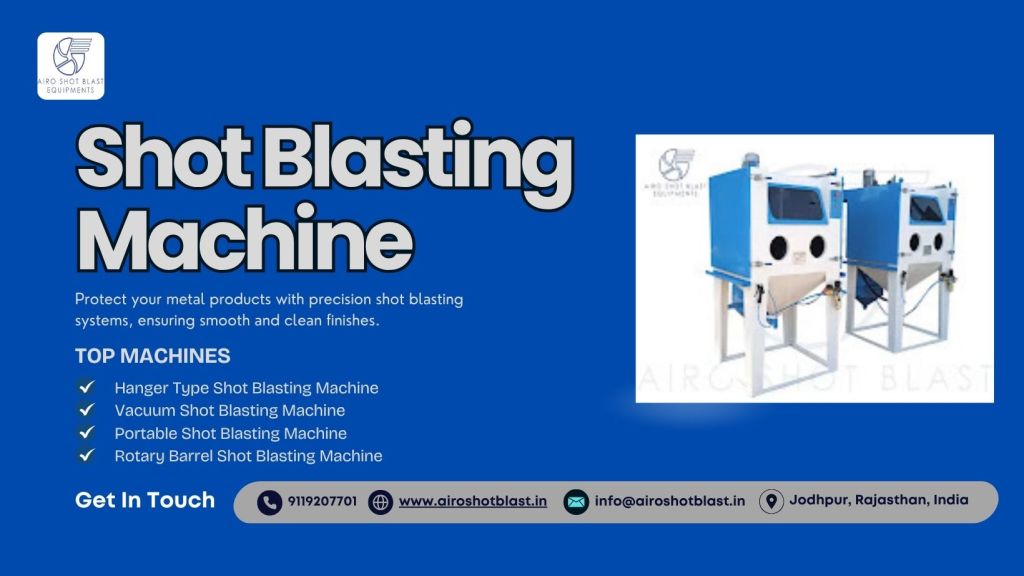
The first noise complaint I received was from our accounting department—two floors up and on the opposite side of the building. That’s when I realized our shot blasting operation had a serious noise problem. We were hitting 105 dB at the machine, and even with walls between us and other departments, people were complaining about the constant roar during production hours. If you’re reading this, you’ve probably faced similar complaints, or you’re trying to avoid them. Let me walk you through what actually works.
Understanding Where the Noise Comes From
You can’t solve a problem you don’t understand. Shot blasting machines create noise from multiple sources, and each one needs a different approach.
The Blast Wheel: Your Primary Noise Culprit
The blast wheel spinning at 2,000-3,000 RPM creates intense noise. Steel shot hitting the control cage, impeller blades accelerating media, the motor itself—it’s all contributing to that signature high-pitched whine. We measured our wheel alone at 95 dB, and that’s before any shot even hits the workpiece.
Air Turbulence and Impact Noise
When shot strikes metal parts at 200+ feet per second, it creates sharp, percussive impacts. This impact noise is actually harder to control than the wheel noise because it’s irregular and covers a wide frequency range. Add in the turbulent air movement inside the cabinet, and you’ve got a complex acoustic nightmare.
The dust collector contributes too—that continuous whoosh of air moving through ductwork at high velocity adds another 80-85 dB to your overall noise signature.
Sound Enclosure Solutions That Actually Work
After our noise complaint, we tried the obvious solution first: building an enclosure around the machine. Sounds simple, but there’s a right way and a wrong way to do this.
Cheap enclosures don’t work. We initially built a simple plywood box with some fiberglass insulation. Cut the noise by maybe 5 dB—barely noticeable to the human ear. The problem was sound transmission through the structure itself and gaps around doors and cable penetrations.
What worked was a proper acoustic enclosure with mass-loaded vinyl barriers, two-inch acoustic foam, and double-wall construction with an air gap. This setup dropped our exterior noise by 20-25 dB. Expensive? Yes—around ₹15,000 for a custom enclosure for our medium-sized blaster. Worth it? Absolutely, because the alternative was relocating our entire operation.
The critical details: seal every penetration, use acoustic gaskets on access doors, and mount the enclosure on vibration isolators. That last part surprised me—we were transmitting noise through the floor until we isolated the whole structure.
Vibration Dampening Technologies
Here’s something I learned the hard way: controlling noise means controlling vibration. They’re connected, and ignoring vibration isolation is leaving easy gains on the table.
We installed spring isolators under our machine base, which cut vibration transmission through the floor by about 70%. The ambient noise in adjacent rooms dropped noticeably even though the machine itself wasn’t any quieter. Sound was traveling through the building structure, and we’d been ignoring it.
Flexible duct connections between your machine and dust collector matter too. Rigid ductwork transmits vibration and amplifies noise. We replaced 20 feet of rigid duct with flexible ducting and acoustic duct liner. Another 3-4 dB reduction, and it only cost a few hundred dollars.
Anti-vibration pads under the motor and blast wheel assembly help as well. These are inexpensive rubber or composite pads that dampen high-frequency vibrations before they reach the machine frame.
Operational Strategies for Noise Management
Technology isn’t the only answer. Sometimes changing how you operate makes the biggest difference.
Smart Scheduling Reduces Complaints
We moved our noisiest shot blasting machine operations to specific time windows. Running between 9 AM and 4 PM, when the building is busiest, minimized complaints because ambient noise levels were already higher. Early morning and late afternoon, when things are quieter, we run less aggressive operations or do maintenance.
Process Modifications That Lower Noise
Reducing blast wheel speed by 10-15% can drop noise levels by 5-8 dB while still getting acceptable results on many parts. We tested this extensively and found that for lighter cleaning applications, slower wheel speeds worked fine and saved our ears.
Shot size matters too. Smaller shot creates less impact noise but takes longer to process parts. For noise-sensitive situations, we switched from S550 shot to S330 and reduced impact noise significantly. The tradeoff was longer cycle times, but sometimes that’s acceptable.
Advanced Acoustic Dampening Materials
The technology in this space has improved dramatically in the last decade. Modern acoustic materials outperform what we had available even five years ago.
Composite acoustic panels with mass-loaded vinyl cores and perforated metal faces work incredibly well inside blast cabinets. We lined our cabinet interior with these panels and cut the noise escaping through the cabinet walls by 15 dB. They’re expensive—about ₹30 per square foot—but incredibly effective.
Acoustic curtains around the work area create a secondary barrier. We hung heavy-duty acoustic curtains (the kind recording studios use) around our entire blasting station. Installation took four hours and cost ₹2,000. The payoff was immediate—noise at the property line dropped below OSHA’s action level.
Don’t overlook acoustically-rated ductwork for your dust collection system. Standard ductwork amplifies noise; acoustic ductwork with sound-dampening liners reduces it. We replaced 40 feet of standard ducting with acoustic duct and cut dust collector noise by about 8 dB.
Meeting Regulatory Compliance Requirements
OSHA’s permissible exposure limit is 90 dB for an 8-hour time-weighted average. Most shot blasting operations exceed this easily, which means hearing protection is mandatory, and you’ve got administrative requirements for hearing conservation programs.
We documented everything: noise level measurements, hearing protection provided, employee training records, annual audiometric testing. The compliance paperwork is tedious but necessary.
Some municipalities have noise ordinances that limit sound at property boundaries—often 65-75 dB during daytime hours. We were violating ours until we implemented the enclosure solution. One noise complaint to the city and you could be facing fines or operation restrictions.
The Investment vs. Return Reality
Let’s talk money. Our complete noise reduction package cost about ₹35,000:
- Acoustic enclosure: ₹15,000
- Vibration isolation: ₹3,000
- Interior acoustic panels: ₹6,000
- Acoustic curtains and duct modifications: ₹4,000
- Engineering consultation and sound testing: ₹7,000
Was it worth it? For us, yes. The alternative was relocating the operation to an isolated building (estimated at ₹200,000+) or facing continuing complaints and potential regulatory action.
We dropped our operation from 105 dB to 78 dB at 10 feet from the enclosure. Adjacent work areas went from 85 dB to 68 dB. Employees are happier, complaints stopped, and we’re fully compliant.
If you’re facing noise issues with your shot blasting operation, start with measurement. Know exactly what you’re dealing with before throwing money at solutions. Then prioritize: enclosure first, vibration isolation second, and operational modifications to fine-tune. The technology exists to make these machines reasonable neighbors—you just need to invest in it properly.


Leave a Reply